

 Image 1 of 3
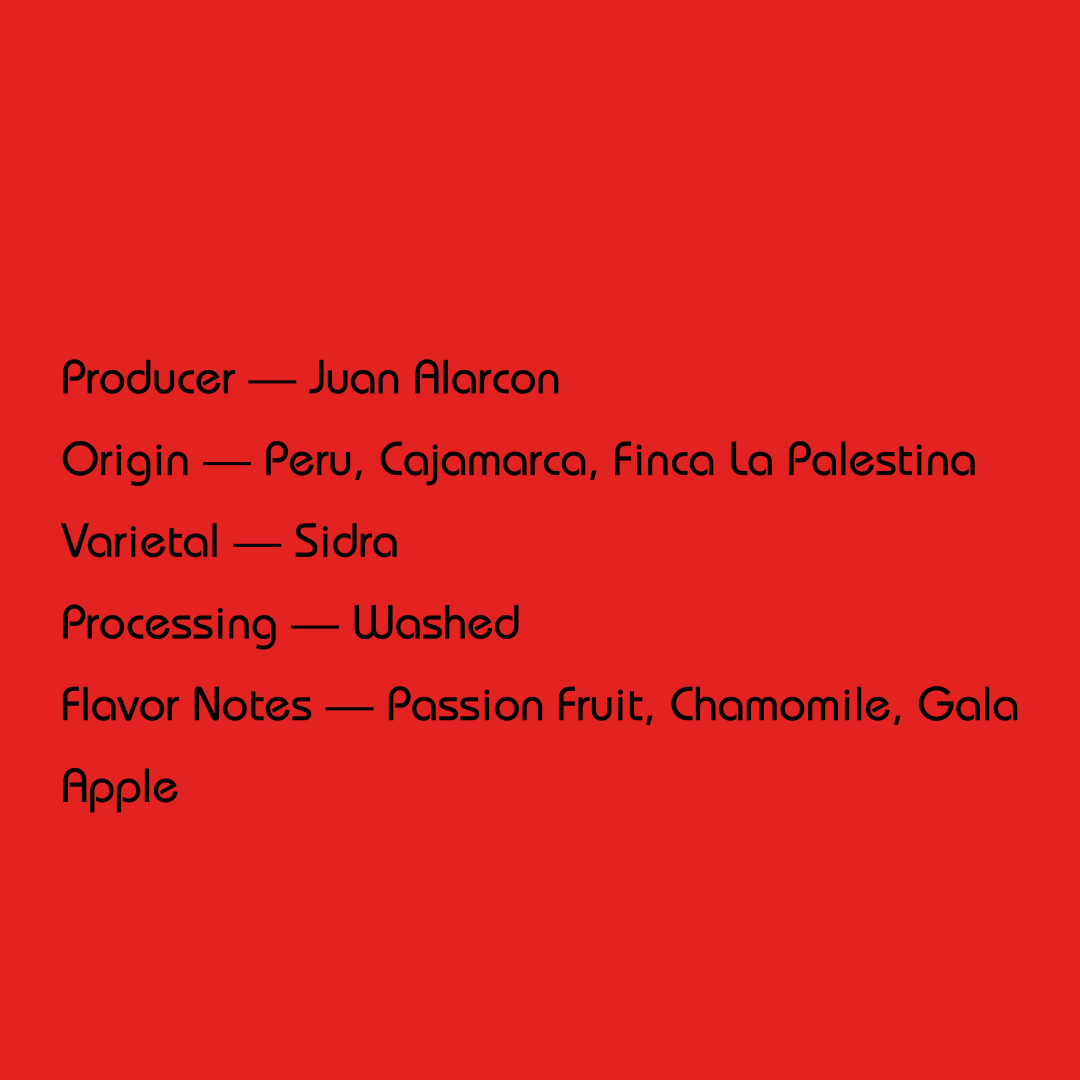 Image 2 of 3
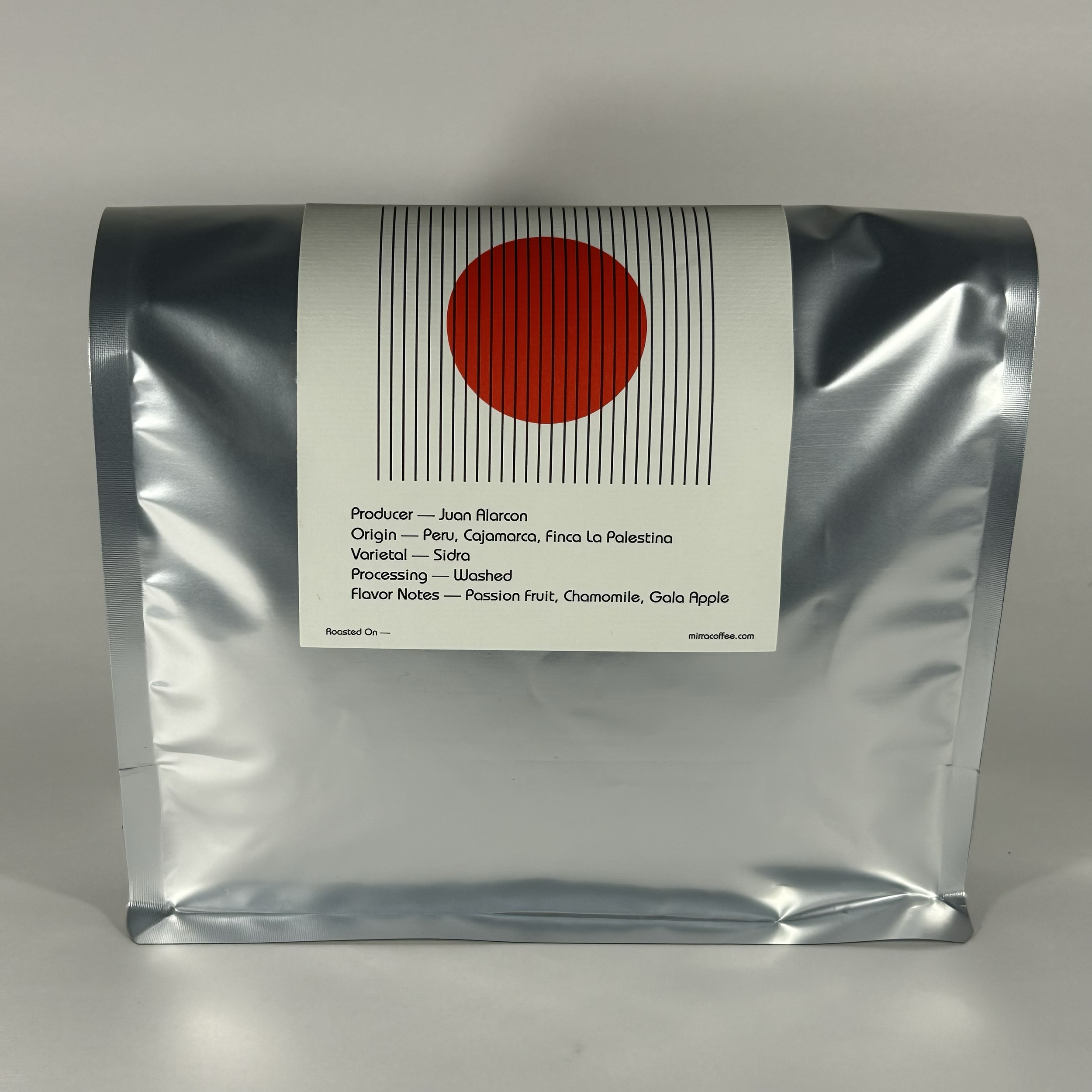 Image 3 of 3
Cost per 250mL serving - $ 2.25
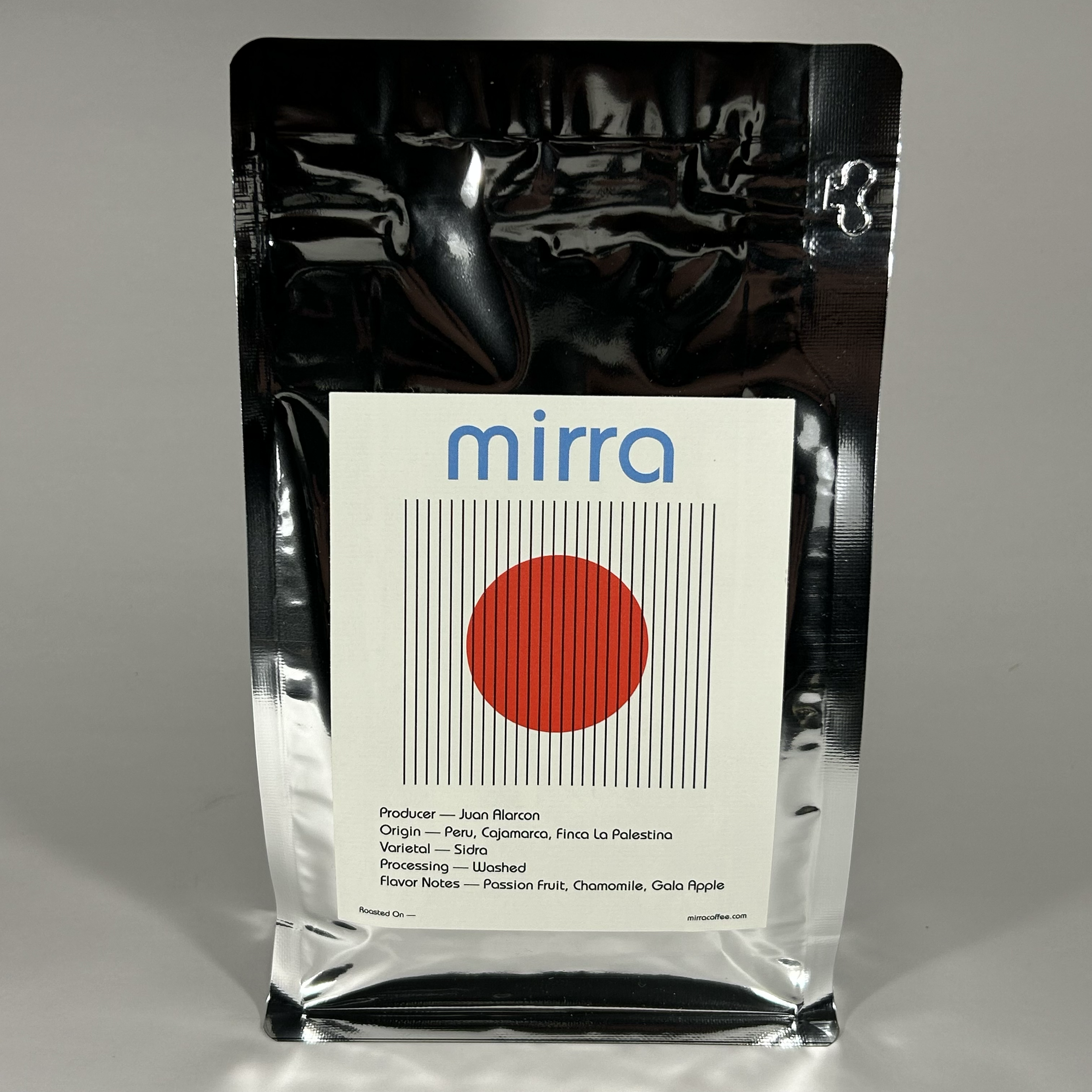
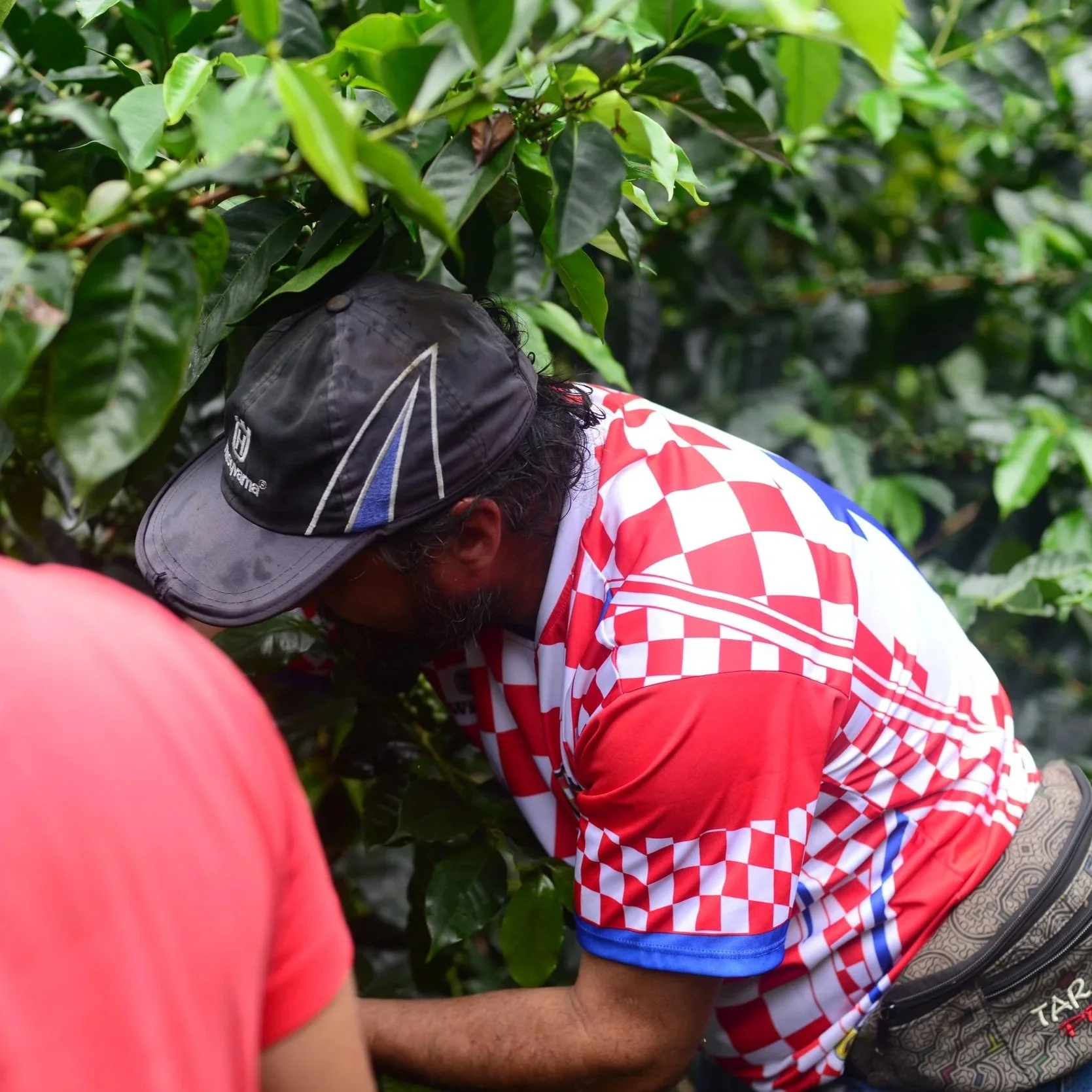
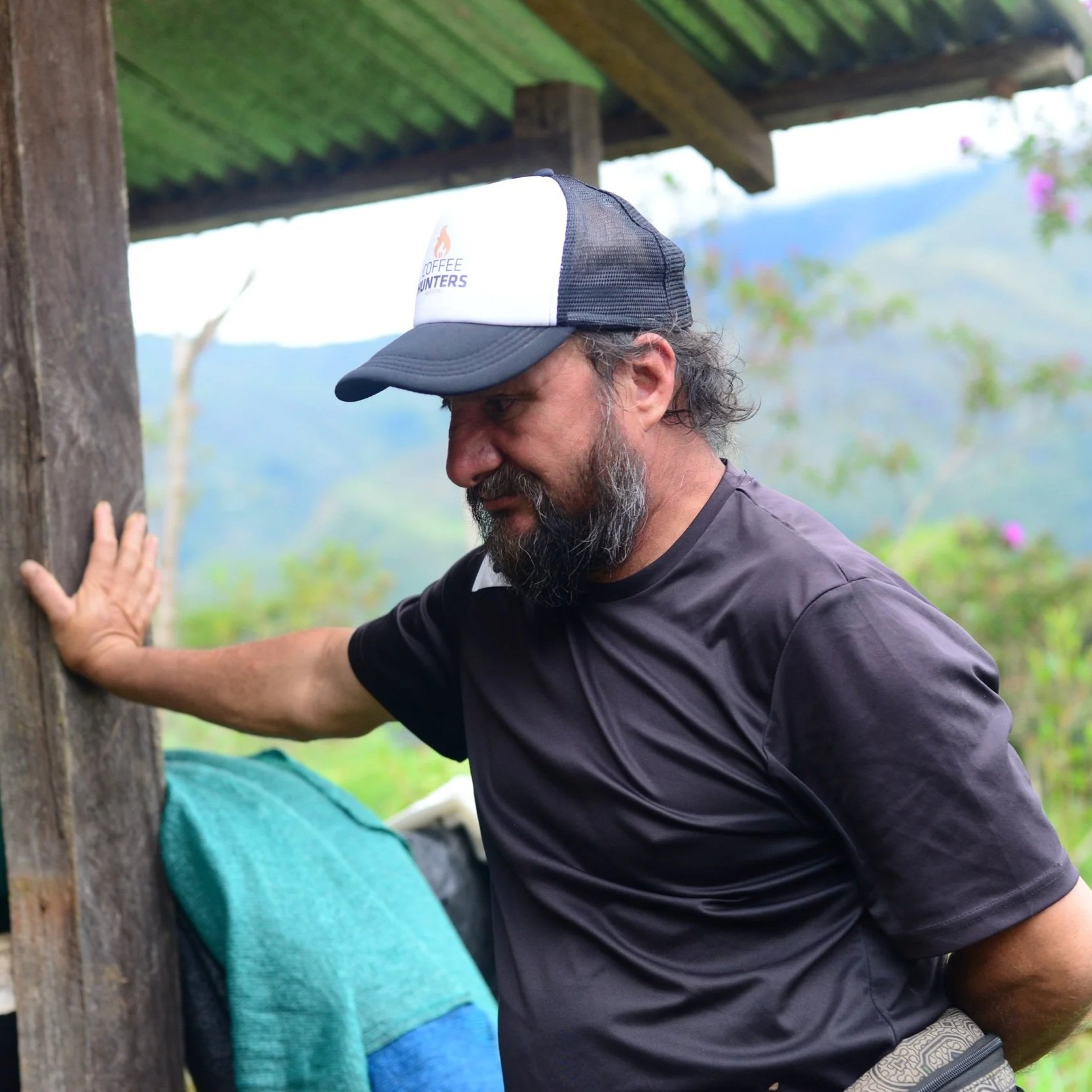
We have been impatiently waiting for the arrival of this crisp and clean washed sidra from Peruvian producer, Juan Alarcon of Finca La Palestina, and finally, it’s here! This lot also marks our very first release from Peru, and we couldn’t think of a more appropriate lot to inaugurate a future that is sure to be replete with Peruvian goodness. When sipping on this coffee, we find an immediate juicy tropical note of passion fruit, followed by a bouquet of sweet, yellow, sunny chamomile, and the bright and crisp zing of gala apple.
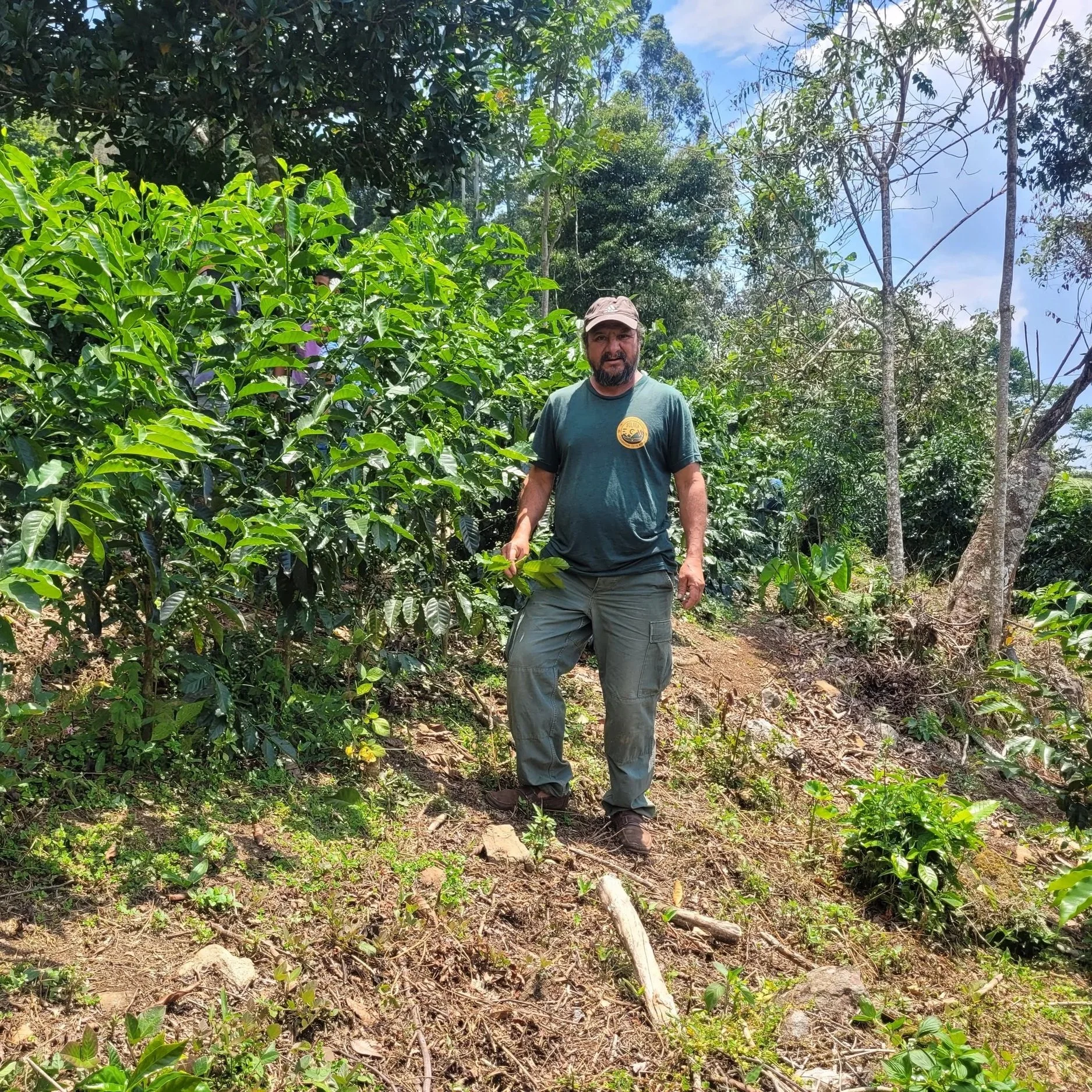
Juan’s farm, Finca La Palestina, is located at 1.900 masl in the Cajamarca region of northern Peru. Mr. Alarcon first purchased the plot of land which would become La Palestina in 1978, and now manages the farm in collaboration with his son, Jose Alarcon. Despite its small size, being only 2 hectares, Juan grows four varieties—marshell, sidra, geisha, and inca geisha.
The genetic heritage of the sidra variety remains relatively uncertain, with two dominant narratives about its origin. The first theory is that it originated from a Nestle research facility in the Pichincha region of Ecuador, where it was created by crossbreeding typica with bourbon; the second being that it is a naturally-occurring mutation of an Ethiopian landrace variety. Due to demonstrable genetic similarities with native Ethiopian varieties when tested in a lab, as well as similarity in cup profile in terms of sweetness, florality, and stone fruit qualities, the later theory is the one we endorse, making it most likely not actually bourbon at all, and instead yet another example of an Ethiopian landrace variety that made its way to Colombia, just like chiroso, geisha, mejorada, papayo, pink bourbon, aji and wush wush. At present, sidra is primarily grown in Colombia and Ecuador, and has only been commercially farmed since 2012, when La Palma y El Tucan planted 1.800 sidra trees on their farm in Cundinamarca, Colombia.
All coffee is sold whole-bean to reduce oxidation, and increase the longevity of volatile organic compounds.
Cost per 250mL serving - $ 2.25
We have been impatiently waiting for the arrival of this crisp and clean washed sidra from Peruvian producer, Juan Alarcon of Finca La Palestina, and finally, it’s here! This lot also marks our very first release from Peru, and we couldn’t think of a more appropriate lot to inaugurate a future that is sure to be replete with Peruvian goodness. When sipping on this coffee, we find an immediate juicy tropical note of passion fruit, followed by a bouquet of sweet, yellow, sunny chamomile, and the bright and crisp zing of gala apple.
Juan’s farm, Finca La Palestina, is located at 1.900 masl in the Cajamarca region of northern Peru. Mr. Alarcon first purchased the plot of land which would become La Palestina in 1978, and now manages the farm in collaboration with his son, Jose Alarcon. Despite its small size, being only 2 hectares, Juan grows four varieties—marshell, sidra, geisha, and inca geisha.
The genetic heritage of the sidra variety remains relatively uncertain, with two dominant narratives about its origin. The first theory is that it originated from a Nestle research facility in the Pichincha region of Ecuador, where it was created by crossbreeding typica with bourbon; the second being that it is a naturally-occurring mutation of an Ethiopian landrace variety. Due to demonstrable genetic similarities with native Ethiopian varieties when tested in a lab, as well as similarity in cup profile in terms of sweetness, florality, and stone fruit qualities, the later theory is the one we endorse, making it most likely not actually bourbon at all, and instead yet another example of an Ethiopian landrace variety that made its way to Colombia, just like chiroso, geisha, mejorada, papayo, pink bourbon, aji and wush wush. At present, sidra is primarily grown in Colombia and Ecuador, and has only been commercially farmed since 2012, when La Palma y El Tucan planted 1.800 sidra trees on their farm in Cundinamarca, Colombia.
All coffee is sold whole-bean to reduce oxidation, and increase the longevity of volatile organic compounds.